
Multiple Pixel Processing ISP
1, 2 or 4 pixels per clock
4Kp120 and 8Kp30 at FPGA

30 dB Noise
AI 2D+3DNR

4K Demo Board, Xilinx KV260
HDR, 4K, 30fps
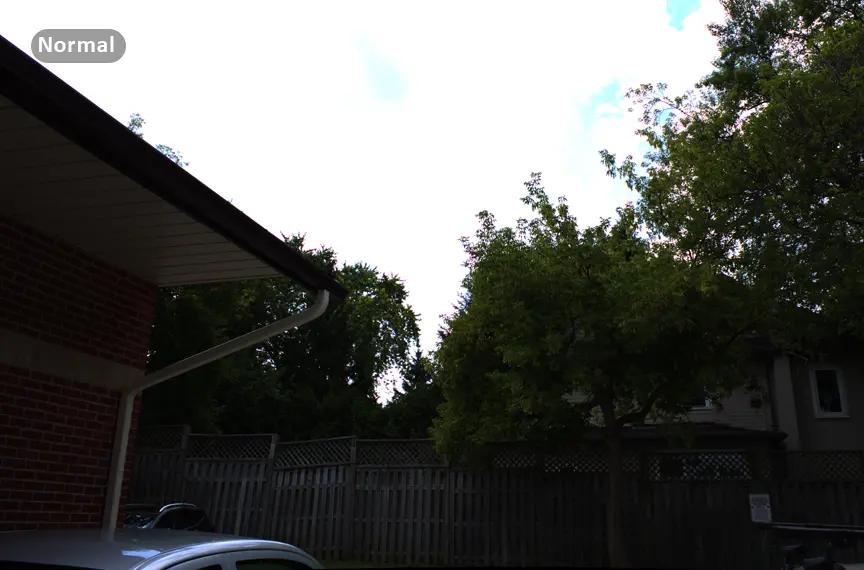
Normal Mode, 4K, 30fps
Multiple Pixel Processing ISP
1, 2 or 4 pixels per clock
4Kp120 and 8Kp30 at FPGA
30 dB Noise
AI 2D+3DNR
4K Demo Board, Xilinx KV260
HDR, 4K, 30fps
Normal Mode, 4K, 30fps



ASICFPGA (Markham, Ontario, Canada, since 2007) develops camera image signal processor (ISP) IP cores for AMD/Xilinx FPGA and ASIC designs, delivered as Verilog source or FPGA netlist with documentation and testbench. The ISP takes Bayer data from the image sensor and performs defect correction, lens shading correction, demosaicing, 2D/3D noise reduction, color correction, gamma, HDR/WDR, edge enhancement and AE/AWB statistics, at 1, 2 or 4 pixels per clock up to 8K.
The AI 2D+3DNR core is a deep-learning denoiser implemented directly in RTL. It runs in the FPGA fabric next to the ISP — no DPU, Vitis AI, NPU or GPU is needed — and is verified on the AMD Kria KV260 at 1920x1080, 30 fps with a Sony IMX678 sensor. See the evaluation kit.